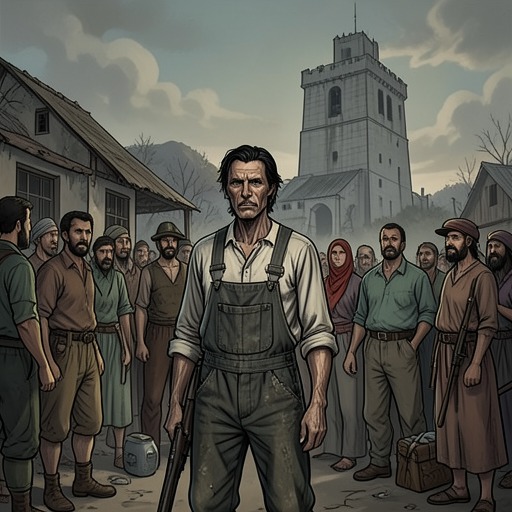
Sicilian Revolution of 1848
The Florios of SicilyThe Sicilian Revolution of 1848 is a revolt against Bourbon rule that briefly restores constitutional government and revives the project of Sicilian independence, only to end in military defeat and renewed repression. Its decisive significance in the novel lies in the collision between public ideals and material vulnerability: political upheaval damages Palermo, interrupts commerce, displaces the Florio family, and forces Vincenzo Florio to navigate a revolution whose cause he partly supports but whose costs he cannot control.
Causes and Political Background
The revolution grows out of an older contest over Sicily’s political autonomy. Since 1796, revolutionary currents had been moving across Italy under Napoleon Bonaparte. The French conquest of Naples forced the Bourbon monarch Ferdinand to take refuge in Palermo, and the island’s importance to Britain increased as the Royal Navy strengthened its Mediterranean presence. War and shifting alliances helped make Palermo a free port and a meeting place for merchants and sailors from across Europe. These changes created commercial opportunity, but also tied the island’s fortunes to the struggles of stronger powers.
Sicily had already experienced a constitutional experiment in 1812. A revolt prompted by Ferdinand’s income tax led the Sicilian government to promulgate a constitution modeled on the Westminster system. It curtailed the Bourbon king’s power, provided for the abolition of fiefdoms, and proposed reforms to modernize government and society. The settlement was overturned in 1816, when Ferdinand united the kingdoms of Naples and Sicily under the name of the Kingdom of the Two Sicilies and annulled the constitution. Thereafter, Neapolitans administered state offices and customs and held military commands in Sicily; heavier taxes, restrictions, and constraints on trade weakened Palermo’s independence and compounded an already faltering economy.
Resentment thus had institutional and economic grounds as well as nationalist force. The 1820 revolt had briefly restored the constitution and the Sicilian Parliament, but division among the island’s cities helped the Bourbons suppress it. By 1848, hatred of Bourbon rule had again intensified, fueled by secret societies and the Palermo aristocracy. In the wider climate of protest, poverty, social conflict, and demands for independence, Giuseppe La Masa and Rosolino Pilo led an insurrection in Palermo on January 12. The city became the first large one in Italy to declare independence from central power. Admiral Ruggero Settimo headed the revolutionary government, which sought the support of aristocrats and the bourgeoisie while attempting to bring ordinary people into decision-making. The Bourbons granted a constitution, and revolutions and constitutional concessions spread elsewhere in Italy and Europe.
Revolutionary Government and the Florio Family
The revolution draws Vincenzo Florio into political decisions with direct commercial consequences. In a private conversation with Giulia Portalupi, he admits that he bought a large consignment of rifles in England on behalf of the revolutionary committee. The rebels proclaimed a Kingdom of Sicily, but lacked a king willing to accept its crown. Vincenzo points to the contradiction: the revolution seeks to revive the island’s constitutional order without securing a ruler or reliable external backing, while Britain opposes a complete break between Sicily and the Bourbons. The project’s political uncertainty makes his purchase feel less like a straightforward commitment than a risk whose outcome is impossible to insure.
That risk is compounded by the new government’s demands on shipping. Vincenzo says that the committee has requisitioned his vessels and effectively forced him to provide a loan. The steamship Palermo, previously working at full capacity for the Sicilian Steamship Company, is taken under Settimo’s regime to transport troops. Vincenzo distinguishes between Settimo, whom he sees as a committed leader willing to reason and mediate, and the more intransigent Pasquale Calvi. His account does not make him a detached observer: the revolution has drawn on his money and property even as he remains wary of its political direction.
The financial consequences are stark. Vincenzo tells Giulia that trading has fallen by half since the revolt began, affecting the merchant bank, foundry, and ships. His complaint is not simply that the revolution costs money; he has spent a lifetime building the business whose documents lie scattered across his study, and now feels that it is being made to finance a war. Giulia answers that a revolution entails chaos and sacrifice, and presses him to discuss the politics rather than dismiss her as a woman. She has read La Masa’s book and understands the aims of those seeking an independent Sicilian state. Their exchange exposes how the struggle enters the household: political knowledge and judgment are contested there as well as in government, while public decisions reach the family through the ledgers, vessels, and risks of Casa Florio.
Defeat, Flight, and the Fall of Palermo
The revolution’s collapse is registered in the city’s physical fabric. Palermo’s sea-facing walls have been shelled and broken; the alleys are obstructed by barricades built to impede Bourbon soldiers, and barracks such as the one at the Noviziato lie devastated. A huge canvas shields Porta Felice, blocking the view of the sea from the Cassaro and preventing signals from passing between the Royal Palace and Bourbon ships offshore. The city’s defenses and landmarks have become evidence of the conflict: even the routes connecting Palermo to the sea are turned into instruments of war.
The Florios’ flight gives that destruction a domestic scale. Ten-year-old Ignazio Florio watches the Quattro Pizzi tower from a ship and understands, without grasping all the politics, that the previous year has stripped away certainties, comforts, and well-being. His family has had to leave first its home on Via dei Materassai and then Villa dei Quattro Pizzi. They take shelter aboard L’Indépendant, a steamship Vincenzo has bought for a separate venture with Ignazio. The ship’s French registration is the practical safeguard: Vincenzo believes neither Bourbon forces nor the rebels will attack it for fear of provoking France. A flag and a legal identity that have not been changed since the purchase now offer refuge when the family’s houses no longer do.
Ignazio sees the revolution through a child’s partial knowledge. He knows that the Bourbons were driven out and that his father became involved with the new government; he has also noticed that Vincenzo has grown more tense and quick-tempered. News that Taormina, Catania, Siracusa, and Noto surrendered in early April tells him Palermo may be next, though no one explains the full significance to him. He instead observes his mother, Giulia, standing at the ship’s prow with the face of fear, and tries to reassure her that his father will return. The contrast between his incomplete understanding and her alarm makes political collapse legible as family uncertainty.
As the revolution’s prospects fail, prominent citizens meet Carlo Filangeri, commander of the Bourbon army, at Caltanissetta and hand over Palermo’s surrender. The people of the city do not accept that decision. They rise against the city guard, build barricades, and reject concessions to the Bourbons, even as hunger bears down on them. Their resistance is met not by sustained leadership but by abandonment: government leaders, including Settimo and La Masa, flee, while aristocrats withdraw to their country villas and courtyards. Palermo is left disordered, starving, exhausted, destroyed, and burning. The divide between a population still resisting and elites who retreat marks the revolution’s political and social failure as well as its military defeat.
Aftermath and Historical Significance
Vincenzo’s position after the revolutionary leaders flee is compromised by necessity. At fifty, he takes a job with the National Guard because the city has collapsed into disorder and he believes he has no choice. He then distances himself from the revolutionary government’s actions as soon as he can, while maintaining that he has managed his business without a false step. His claim to commercial prudence sits uneasily beside his earlier rifle purchase and the requisition of his ships: the revolution has made clean separation between private enterprise and political obligation impossible.
The Bourbon restoration confirms the fragility of the revolutionary gains. Ferdinand II seeks to restore unity in the Kingdom of the Two Sicilies, imposes a heavy national debt, and suspends the constitution promulgated by the Sicilian Parliament in March 1848. Weary people and local administrations accept the taxes; aristocrats distance themselves from further rebellion, though isolated uprisings continue, chiefly in the countryside. British pressure to reduce the tax burden and the repression brings little relief. The regime’s reactionary character persists under Francesco II, who succeeds his father in 1859 and fails to move the south toward economic and social progress. Meanwhile, the exiles of 1848 keep the independence cause alive in their writing and political interventions, including those of La Masa, Settimo, and Francesco Crispi.
For the Florios, the political aftermath remains tangible beyond the immediate fall of Palermo. In a later dispute over postal service, Vincenzo recalls that the Bourbons retained three of the family’s five steamers for transporting troops during the turmoil of Garibaldi’s occupation, sank one vessel, and then sought to fine him for interrupted mail distribution. The quarrel turns on a service agreement and the failure of official forms and stamps to arrive; its bitter irony is that the family is charged for a disruption caused by the regime’s own requisitioning. The Revolution of 1848 therefore belongs to a longer pattern in the novel: changes of government alter access to ships, trade, and public contracts, while the costs of political power settle on a family whose wealth depends on the very infrastructure rulers can seize. The revolution’s defeat ends its brief constitutional opening, but does not erase the demands for independence or the commercial and personal consequences of having lived through it.